
Diese Reihe praktischer Kurzanleitungen hilft dabei, den eigenen Garten auf ökologisch sinnvolle Weise anzulegen.
Einführung in urbane Gärten
Obwohl es zahlreiche anerkannte Gartenstile gibt, ist ein Garten im Grunde ein kreativer Prozess, dem sich sein Gestalter im Wechselspiel mit der Natur hingibt.
Er ist ein fortlaufendes Projekt — ein sich ständig änderndes Ökosystem, in dem sich die Vorstellungen des Gärtners weiterentwickeln. Von entscheidender Bedeutung ist dabei auch der wesentliche Beitrag, den die Gärten von heute zur Erhaltung der biologischen Vielfalt und zur Abschwächung der Klimakrise leisten.
Private Gärten in Städten, insbesondere in Europa, sind ein wichtiger Teil des Stadtwalds, den ich als ein Ökosystem definiere, das sich durch das Vorhandensein von Bäumen, der mit ihnen verbundenen Flora, Pilzen und Fauna, die von ihnen besiedelten Böden und Landschaften sowie die Luft- und Wasserressourcen, mit denen sie koexistieren, auszeichnet, und zwar in dynamischer Verbindung mit Menschen und ihren Lebensräumen 1.
In vielen unserer älteren europäischen Städte gibt es nicht genügend Platz für Bäume und städtisches Grün, zudem werden ehemals vorhandene Flächen inzwischen häufig durch neue Gebäude und asphaltierte Bereiche besetzt. Daher sind es unsere privaten Gärten, die dazu beitragen, diesen Mangel auszugleichen und uns selbst, unserer unmittelbaren Nachbarschaft und darüber hinaus Nutzen zu bringen.
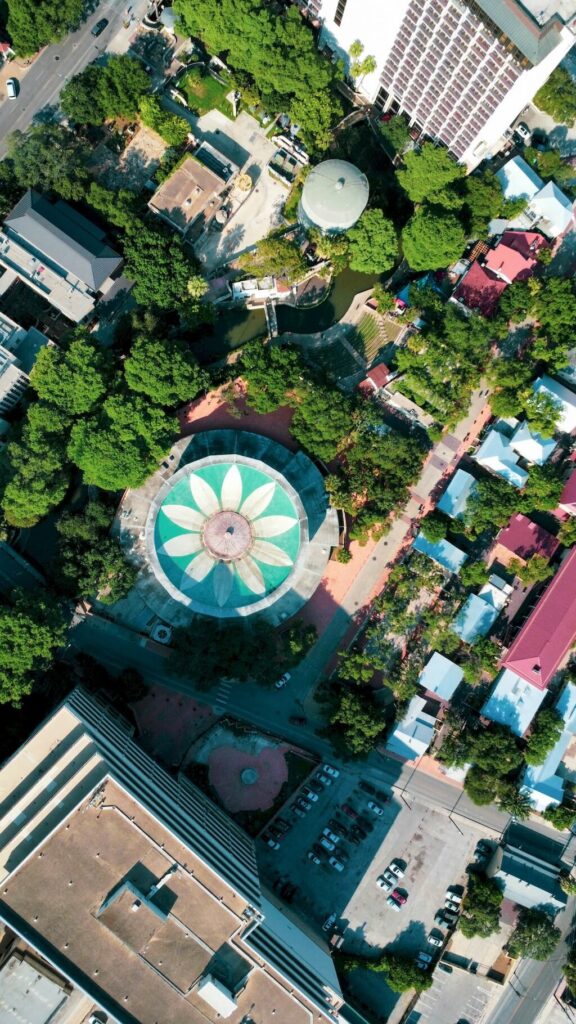
1) Der urban forest verbindet öffentliche Räume und private Gärten und lebt von ihnen
© Ahnaf Tahsin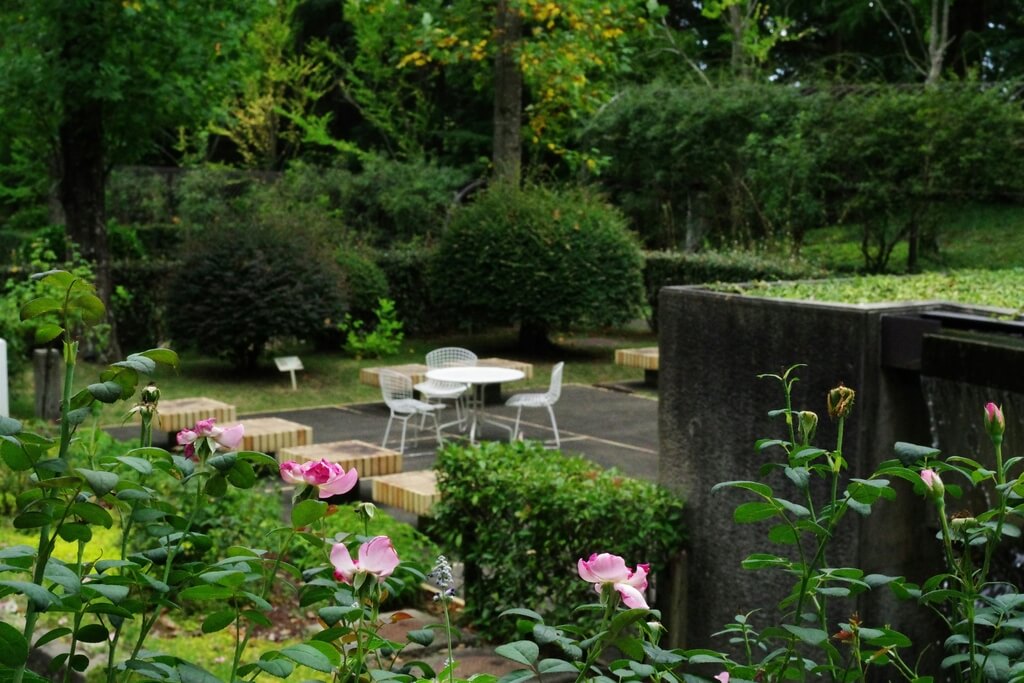
2) Gärten können als Ort der Entspannung dienen…
© Naoki Suzuki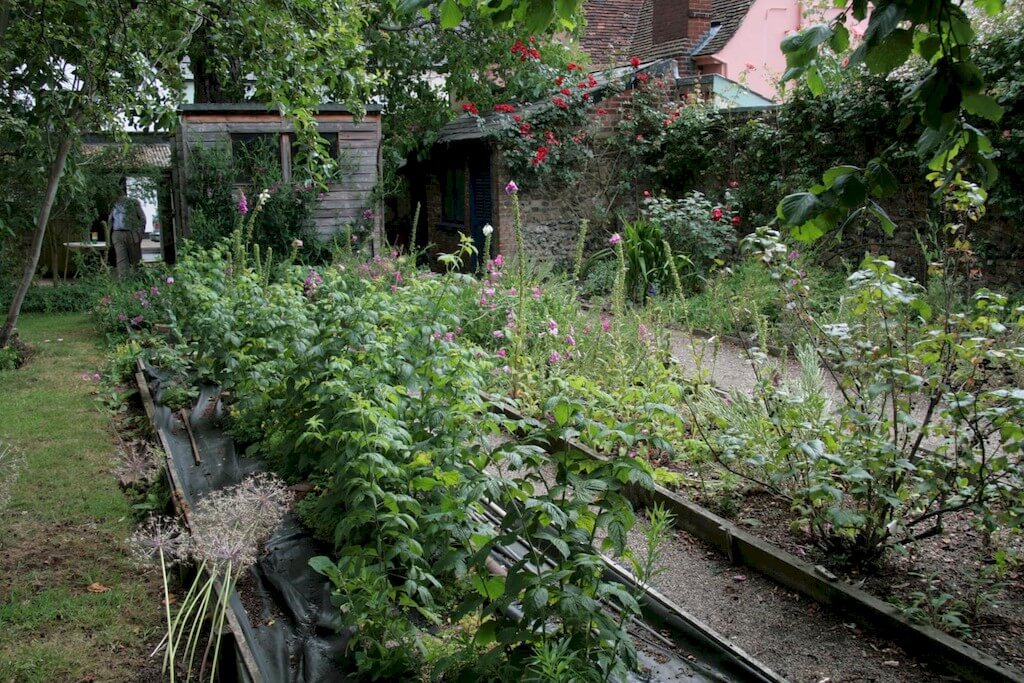
3) … und als lokale Quelle für frische Lebensmittel.
Urban allotment © Karen Roe
Pretty is not always sustainable – how do we determine what is and what isn’t
There are many styles of urban garden design as this assortment of photos is showing but if we want our urban garden spaces to thrive, we need to design with more than just pretty or aesthetics in mind. We need to think sustainable natural systems in accommodating our own wishes as well as the needs of the diversity we are inviting into our urban garden space. So let’s analyze these photos for that critical sustainability element.
For the most part, this space has sustainability potential however, the use of asphalt for the area under the picnic table and chairs is neither sustainable or relaxing on a hot summer’s day given the total lack of shade and the re-radiating impervious surface. A more viable choice for a hard surface would use dry set stones such as Belgian Block, porous or pervious pavers, reducing the Urban Heat Island (UHI) effect and improving soil health as well as water infiltration and filtration.
Rooftop gardens can be extremely beneficial in reducing UHI but many rooftops are not structurally engineered to accommodate trees given the additional weight of required soil volume and irrigation. In addition, the depth of the soil that the roof can accommodate can greatly limit what can be planted and sustained.
It is with this understanding that a successful approach has explored the world of alpine plants with a focus on Sedums – sun-loving, drought tolerant low-maintenance evergreen perennials that, while still needing regular irrigation, can tolerate extreme heat and cold and do not require deep, nutrient rich soils. In addition to improving air quality, their dense growth adds insulation to the roof area reducing energy consumption and costs, they are much loved by bees, butterflies and other pollinators.
While this sidewalk garden has dry set cobblestones within its footprint, it has been forgotten that the tree’s roots will extend underneath and well beyond the curb.
The adjacent sealed sidewalk will unfortunately not accommodate roots’ needs very well. Instead, the dry set approach should have continued and would have provided a much improved and sustainable growing environment.
There is absolutely nothing sustainable in this unfortunate cosmetic attempt to green our cities. Trees do not belong in small boxes on balconies, somewhere up in the air. They belong in the ground, in real living soil, populated with the microbial, invertebrate and mycorrhizal communities they and their root system depend on for sustenance.
Trees should be enabled for the long term growth they are extremely capable of, rather than the short term jewelry approach that ensures early decline and premature death.
This garden design has taken many steps to address sustainability except for the use of turf within the tree canopy footprint, remembering that trees and turf do not coexist well at all and, given the potential longevity of trees and what they contribute to the environment as well as human wellbeing, we should reduce our use of turf which has no benefits and only increases negatives.
What is also problematic is using the base of the tree for storage, increasing compaction and reducing air and moisture exchange.
It would appear that there was an attempt to create a rock garden but with an excessive amount of soil sealing impervious material (UHI), no shade and no relationship to the alpine ecosystem that is the foundation for rock gardens. In addition:
• the use of sterile turf as the primary pathway reduces biodiversity and sustainability while increasing the need for resources such as irrigation and mycorrhizal killing fertilizers
• replacing what should be an organic layer, preferably composted chipped bark mulch with gravel again increases UHI while reducing soil health and biodiversity.
Successful gardens are best built on a healthy, thriving soil ecosystem thought process. Supporting and sustaining that ecosystem is thoroughly explored in the guide entitled A basic soil primer – determining what your soil can successfully grow .
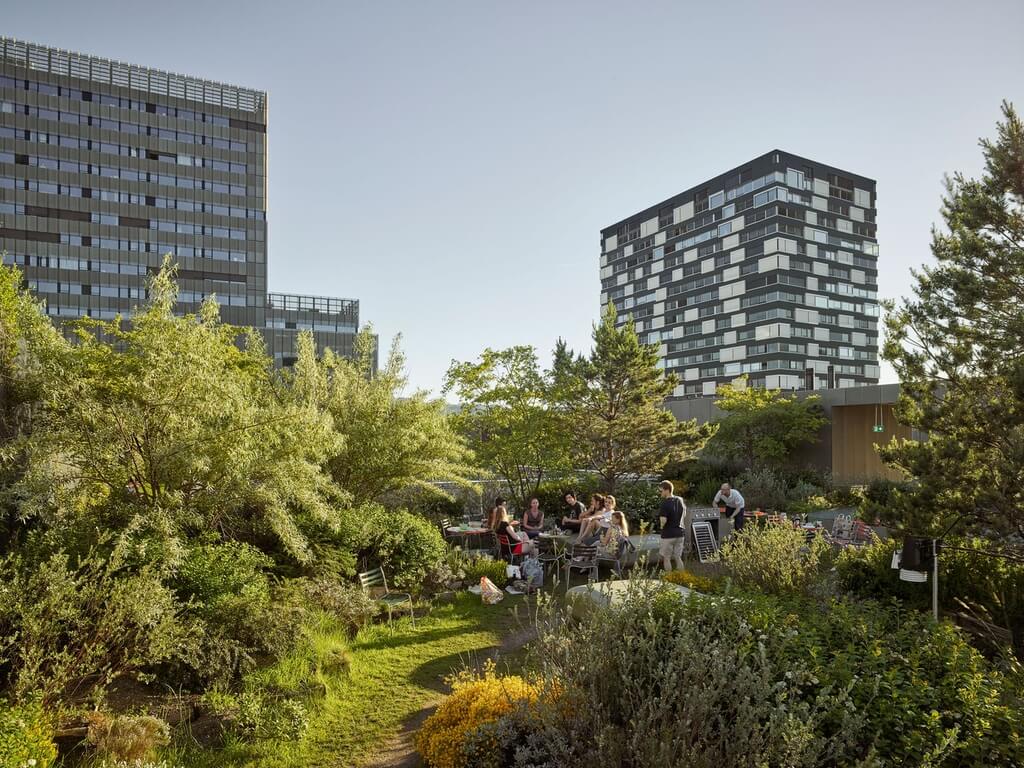
4) Versteckte Stadtlandschaften schaffen.
Dachgarten, Toni Areal, Zurich © Roland Bernath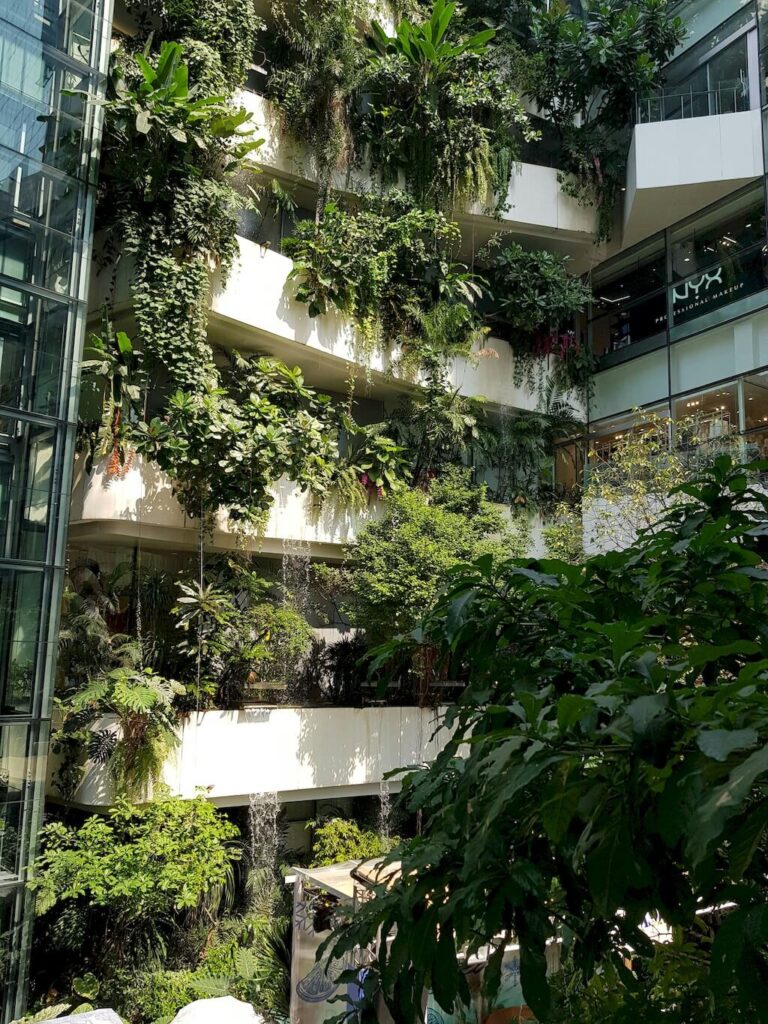
6) In Städten kann der urbane Wald auch vertikal sein.
Pflanzen im Gebäude © Jun Young Liew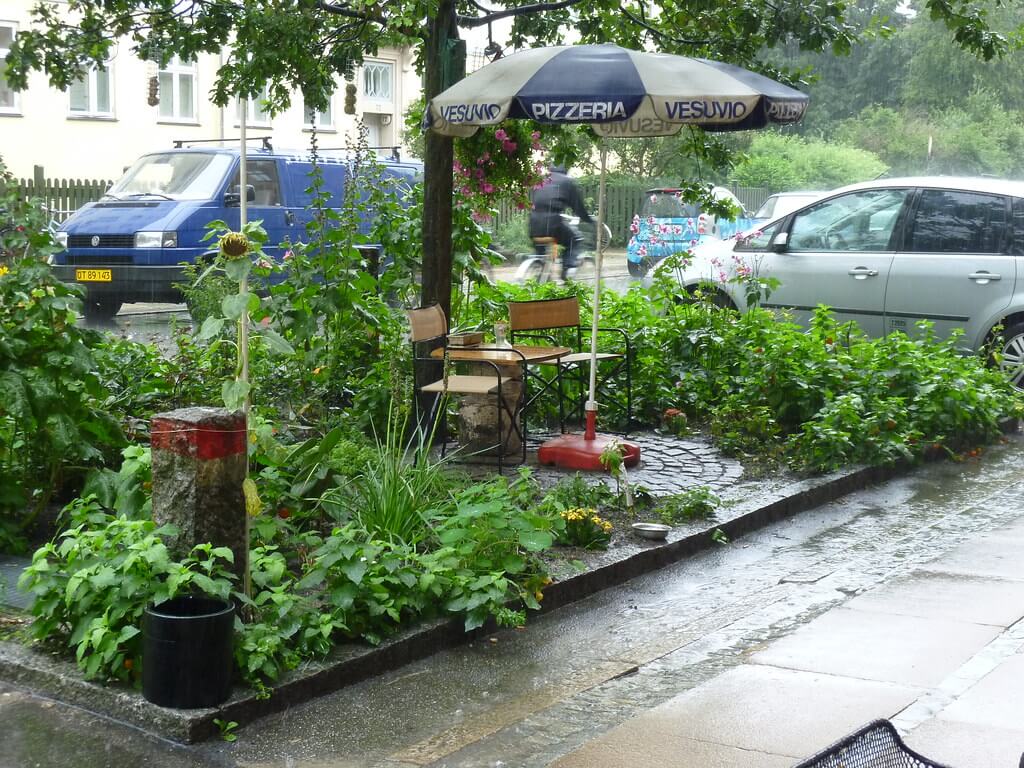
5) Manchmal gibt es „private“ Gärten in öffentlichen Räumen.
Der Bordstein-Garten, Copenhagen © kreetube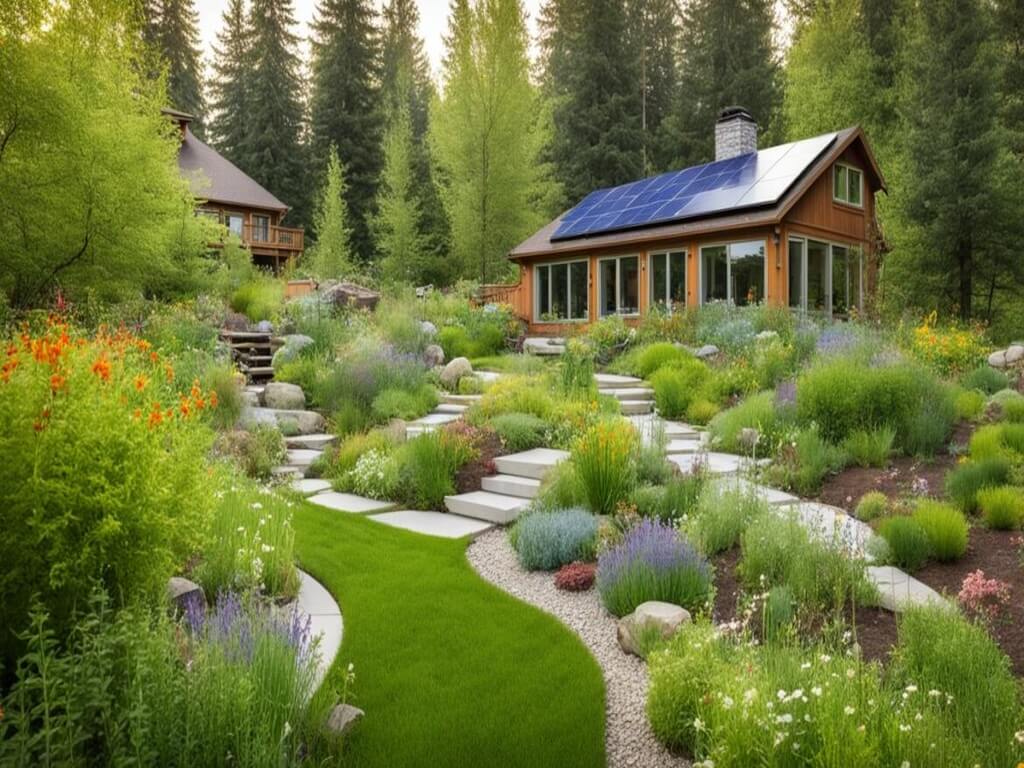
8) Wie sieht der Traumgarten aus?
Virtueller Garten, computergeneriertes Bild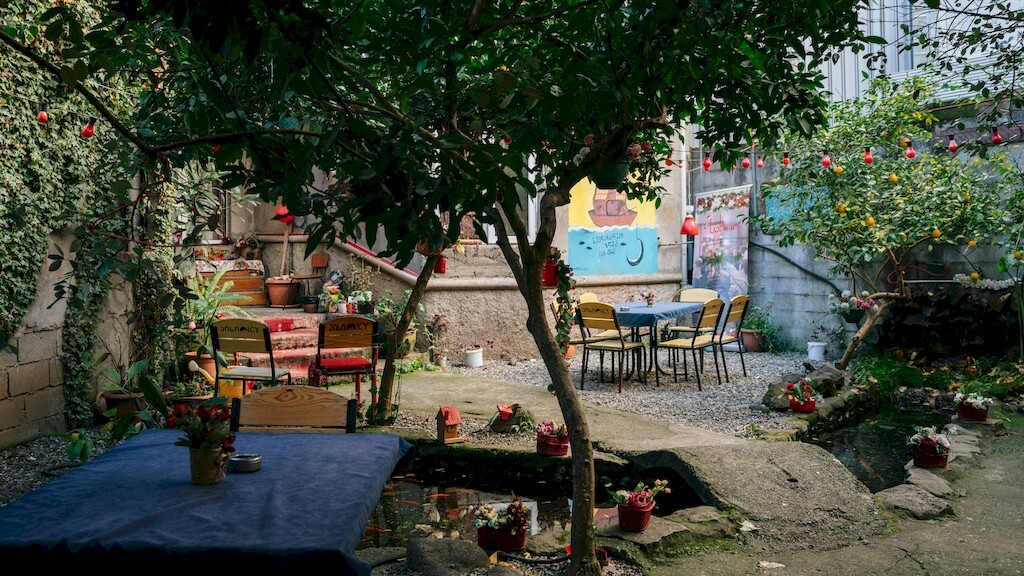
7) Der Stadtgarten erfüllt verschiedene Zwecke.
Innenhof © Nick Night
Wie auch immer wir uns unseren Garten vorstellen und welche Bedürfnisse dieser Raum für jeden von uns erfüllen soll, ist es entscheidend, dass wir auch das sichtbare und unsichtbare Leben berücksichtigen, das ein Garten versorgt. Dieses Leben ist Teil des kleinen Ökosystems, das wir schaffen, und trägt dazu bei, unser eigenes Wohlbefinden zu erhalten.
Unsere Kurzanleitungen decken verschiedene Aspekte der Planung und Pflege eines privaten Gartens in einem städtischen Umfeld ab und sollen Ihnen dabei helfen, Ihre Vorstellungen aus ökologischer Sicht erfolgreich umzusetzen:
- Analyse des Gartens, Planung einer funktionalen, raumbezogenen Umgebung für alle Bewohner
- Lebensräume für sich und alle anderen schaffen
- Bestimmen, welche Pflanzen in Ihrem Boden gut gedeihen können
- Die besten Pflanzen für Ihren Garten und die darin enthaltenen Lebensräume auswählen
- Einbindung von Bäumen und Sträuchern — wie Sie deren wichtige Rolle unterstützen können
- Ökologischer Umgang mit nützlichen und unerwünschten Insekten mittels chemiefreier Strategien
- Ausbau von Struktur- und Bauelementen mit einem gartenfreundlichen Ansatz
Je nach Interesse und Bedarf können Sie die oben erwähnten Beiträge aufrufen.
Wir hoffen, dass die Informationen, die wir auf unserer Webseite bereitstellen, Sie bei der Verwirklichung Ihrer Vision eines urbanen Gartens unterstützen und all dem Leben zugute kommen, das Ihr Garten beherbergt.
About the Author:
Naomi Zürcher ist praktizierende Urban Forester, Consulting Arborist und Chartered Environmentalist mit über 40 Jahren Berufserfahrung in ihrer Heimat New York und nun auch in der Schweiz. Ihre Arbeit umfasst das gesamte Spektrum der Urban Forestry und -verwaltung, sowohl in der Praxis als auch in der angewandten Forschung. Sie ist als Programmmanagerin, Gastdozentin, eingeladene (Co-)Autorin und assoziiertes Mitglied des i-Tree-Teams sowie anderer internationaler Netzwerke tätig.
References:
- Zürcher, N. (2022). Connecting Trees with People – Synergistic Strategies for Growing the Urban Forest. Springer Nature Cham Switzerland ISBN 978-3-030-94533-6 ↩︎
Images:
- Aerial view of city with trees © Ahnaf Tahsin. Source: Unsplash
- A view of a park with a bench and trees © Naoki Suzuki. Source: Unsplash
- The Hidden Gardens of Bury St Edmunds © Karen Roe. Source: Karen Roe / Flickr
- Rooftop garden, Toni Areal, Zurich © Roland Bernath. Source: Archdaily Magazine – Toni Areal Roof Garden / Studio Vulkan Landscape Architecture
- The sidewalk garden, Copenhagen © kreetube. Source: kreetube/Flickr
- Green plants on building © Jun Young Liew. Source: Unsplash
- Inner patio © Nick Night. Source: Unsplash
