
This series of practical quick guides helps you to develop your personal garden with a good basis from an ecological point of view.
Introducing the urban garden
There are many recognized garden styles but, in reality, a garden is the creative process of its maker combined with nature’s cooperation.
It is a work in progress – a constantly evolving ecosystem as the gardener’s vision for it evolves. What is also critical to recognize is the essential contribution today’s gardens are making to sustaining biodiversity as well as the mitigation of the climate crisis.
Urban gardens, especially those in European cities, are a critical part of the Urban Forest which I have defined as an ecosystem characterized by the presence of trees and related flora, funga and fauna, the soils and landscapes they populate and the air and water resource they coexist with, all in a dynamic association with people and their human settlements 1.
Many of our older European cities have inadequate space for trees and urban green space and many of the spaces that had existed are now often consumed by new buildings and more paved surfaces. It is, therefore, our private urban gardens that help to compensate for this inadequacy and deliver benefits to ourselves, our immediate neighborhoods and beyond.
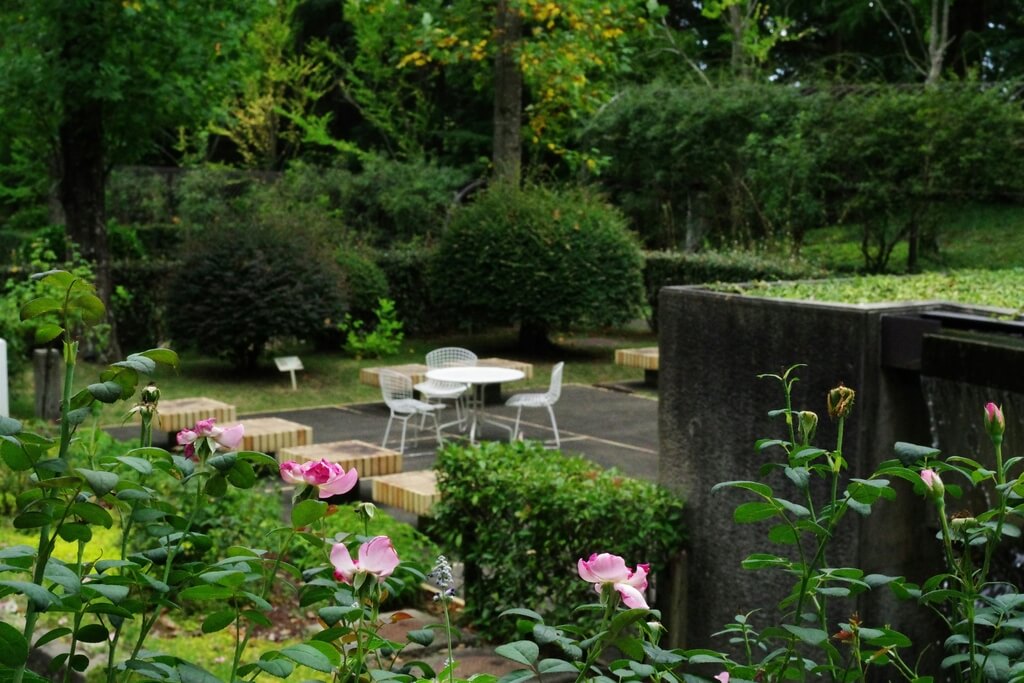
For the most part, this space has sustainability potential however, the use of asphalt for the area under the picnic table and chairs is neither sustainable or relaxing on a hot summer’s day given the total lack of shade and the re-radiating impervious surface.
A more viable choice for a hard surface would use dry set stones such as Belgian Block, porous or pervious pavers, reducing the Urban Heat Island (UHI) effect and improving soil health as well as water infiltration and filtration.
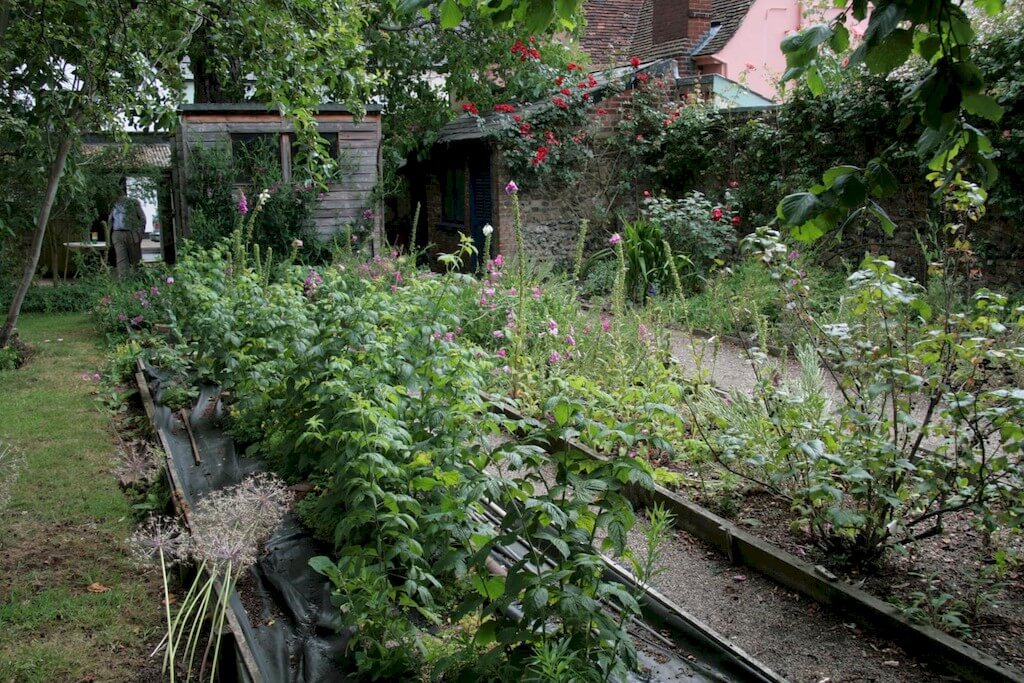
Urban allotment © Karen Roe / Flickr
Pretty is not always sustainable – how do we determine what is and what isn’t
There are many styles of urban garden design as this assortment of photos is showing but if we want our urban garden spaces to thrive, we need to design with more than just pretty or aesthetics in mind. We need to think sustainable natural systems in accommodating our own wishes as well as the needs of the diversity we are inviting into our urban garden space.
So let’s analyze these photos for that critical sustainability element.
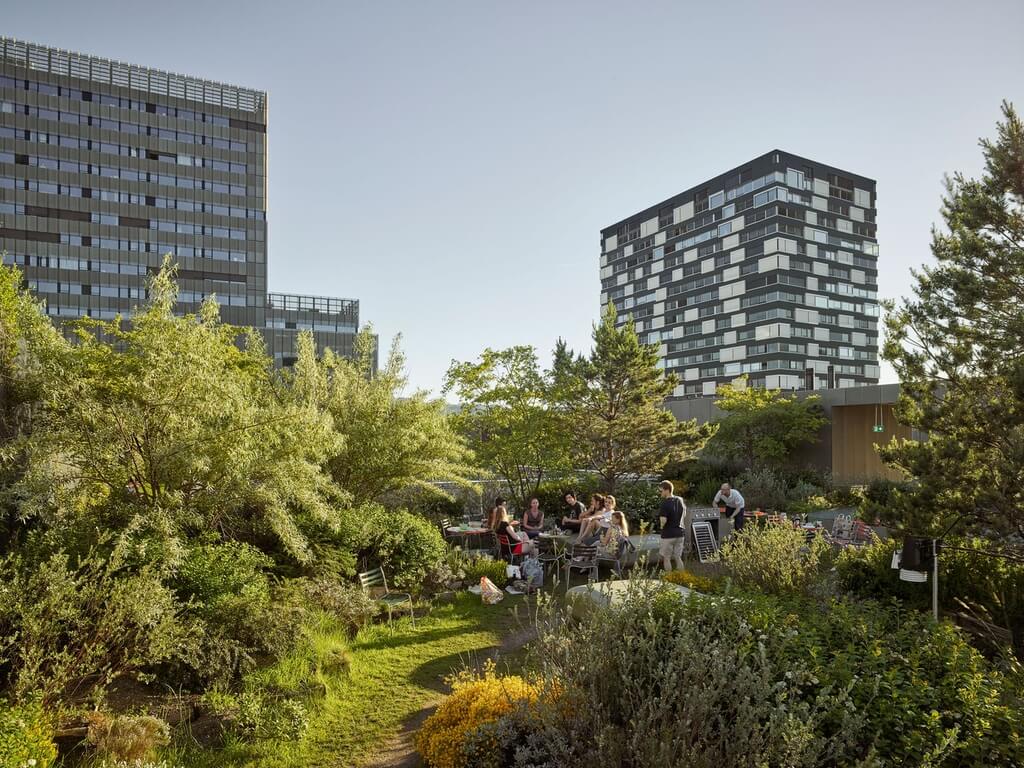
Rooftop garden, Toni Areal, Zurich © Roland Bernath / Archdaily Magazine
Rooftop gardens can be extremely beneficial in reducing UHI but many rooftops are not structurally engineered to accommodate trees given the additional weight of required soil volume and irrigation. In addition, the depth of the soil that the roof can accommodate can greatly limit what can be planted and sustained.
It is with this understanding that a successful approach has explored the world of alpine plants with a focus on Sedums – sun-loving, drought tolerant low-maintenance evergreen perennials that, while still needing regular irrigation, can tolerate extreme heat and cold and do not require deep, nutrient rich soils. In addition to improving air quality, their dense growth adds insulation to the roof area reducing energy consumption and costs, they are much loved by bees, butterflies and other pollinators.
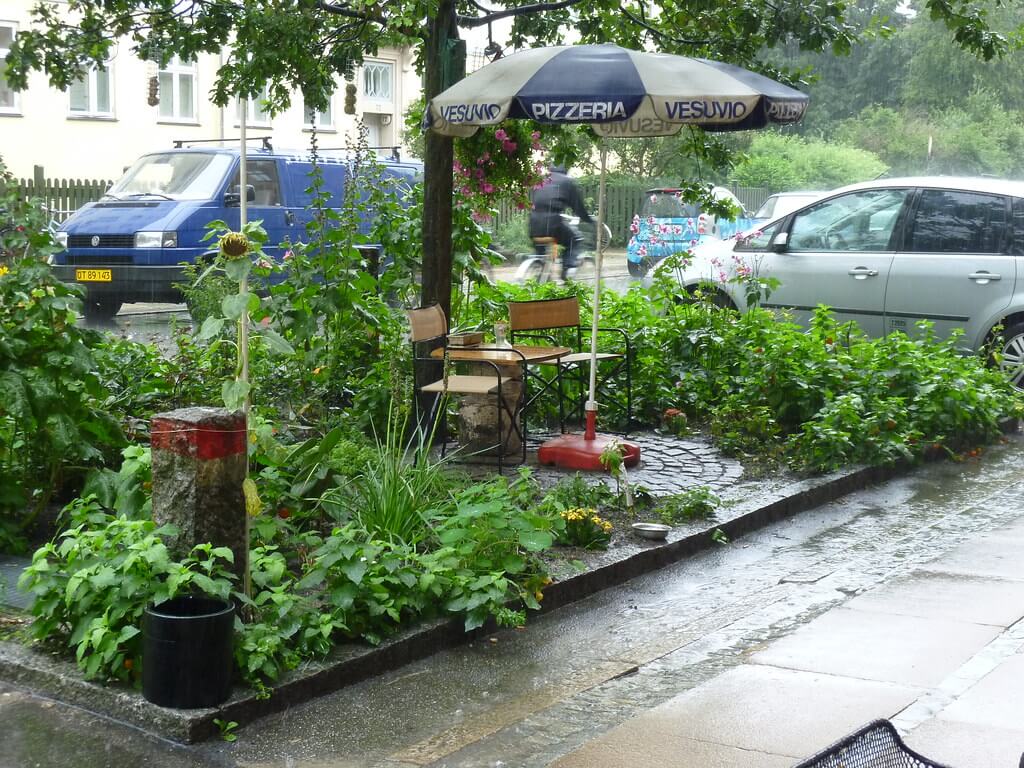
The sidewalk garden, Copenhagen © kreetube/Flickr
While this sidewalk garden has dry set cobblestones within its footprint, it has been forgotten that the tree’s roots will extend underneath and well beyond the curb.
The adjacent sealed sidewalk will unfortunately not accommodate roots’ needs very well. Instead, the dry set approach should have continued and would have provided a much improved and sustainable growing environment.
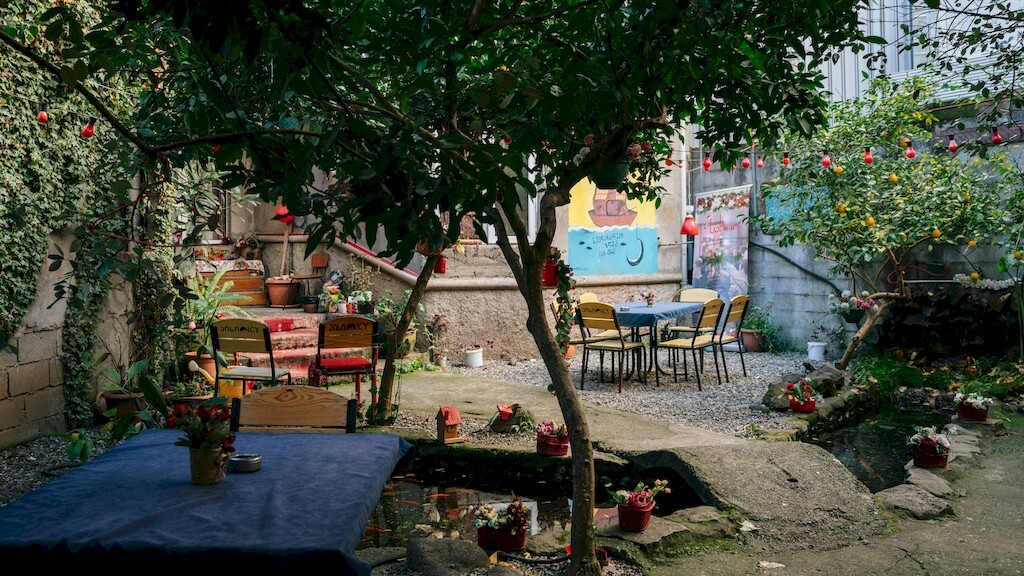
Inner patio © Nick Night / Unsplash
This garden design has taken many steps to address sustainability except for the use of turf within the tree canopy footprint, remembering that trees and turf do not coexist well at all and, given the potential longevity of trees and what they contribute to the environment as well as human wellbeing, we should reduce our use of turf which has no benefits and only increases negatives.
What is also problematic is using the base of the tree for storage, increasing compaction and reducing air and moisture exchange.
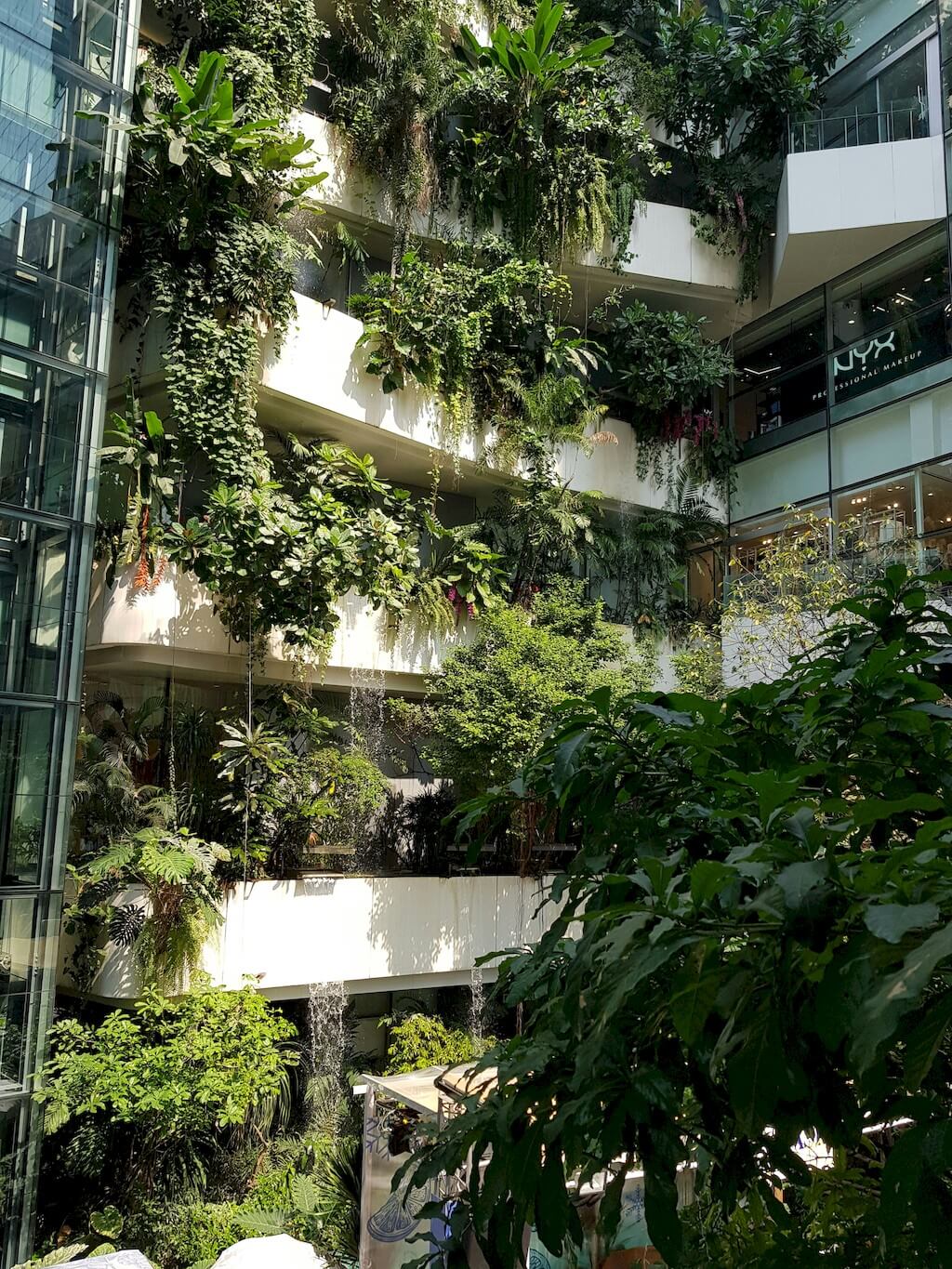
Plants in building © Jun Young Liew / Unsplash
There is absolutely nothing sustainable in this unfortunate cosmetic attempt to green our cities. Trees do not belong in small boxes on balconies, somewhere up in the air. They belong in the ground, in real living soil, populated with the microbial, invertebrate and mycorrhizal communities they and their root system depend on for sustenance.
Trees should be enabled for the long term growth they are extremely capable of, rather than the short term jewelry approach that ensures early decline and premature death.
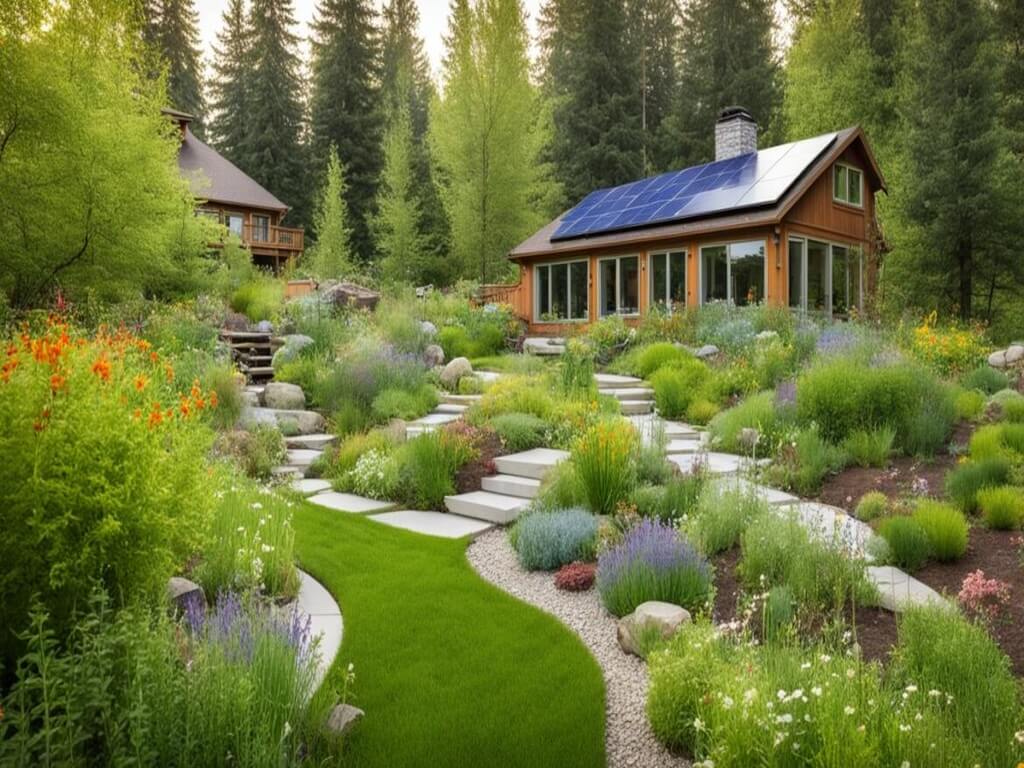
Virtual garden, computer-generated image
It would appear that there was an attempt to create a rock garden but with an excessive amount of soil sealing impervious material (UHI), no shade and no relationship to the alpine ecosystem that is the foundation for rock gardens. In addition:
- the use of sterile turf as the primary pathway reduces biodiversity and sustainability while increasing the need for resources such as irrigation and mycorrhizal killing fertilizers
- replacing what should be an organic layer, preferably composted chipped bark mulch with gravel again increases UHI while reducing soil health and biodiversity.
Successful gardens are best built on a healthy, thriving soil ecosystem thought process. Supporting and sustaining that ecosystem is thoroughly explored in the guide entitled A basic soil primer – determining what your soil can successfully grow.
The Quick Guides we are developing are designed to address many aspects of planning and managing an urban garden and help you successfully realize your garden vision from an ecological perspective:
- Analyzing your garden space – planning a functional space-based haven for all occupants;
- Creating habitats for yourself and everything else;
- A basic soil primer – determining what your soil can successfully grow;
- Incorporating trees – how to accommodate their critically important presence;
- Managing beneficial as well as unwanted insects ecologically using chemical free strategies;
- Expanding structural / building elements using a garden-friendly approach.
Depending on your interests and need for guidance, please visit any or all of the above-referenced sections.
We hope the information we share will assist you in realizing your urban garden vision, benefiting all the life your garden will accommodate and sustain.
About the Author:
Naomi Zürcher is a practicing Urban Forester, Consulting Arborist and a Chartered Environmentalist, with over 4 decades of professional experience in her native New York and now in Switzerland as well. Her work has spanned the full range of Urban Forestry planning and management, covering both practice and applied research. She’s been active as a program manager, guest lecturer, invited (co-)author and an affiliate member of the i-Tree team as well as other international networks.
References:
- Zürcher, N. (2022). Connecting Trees with People – Synergistic Strategies for Growing the Urban Forest. Springer Nature Cham Switzerland ISBN 978-3-030-94533-6 ↩︎
